Heim
Heim  Navigation


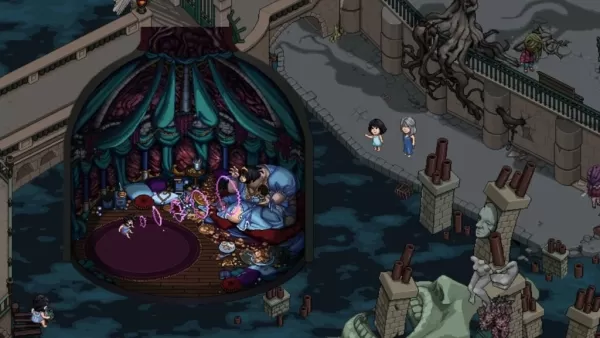
Decarnation is more than just a game—it’s an intimate, haunting journey into the fractured psyche of Gloria, a once-bright cabaret dancer now adrift in the ruins of her own life. As you navigate its dreamlike, surreal environments, you're not just solving puzzles—you're unraveling the tangled threads of memory, guilt, and longing.
The Core of the Story: A Descent Into the Self
Gloria’s world crumbles under the weight of unspoken truths. Her dazzling stage presence once masked a deep inner emptiness. Now, her career is over, her lovers have left, and her identity has dissolved like smoke. In her darkest hour, a mysterious figure offers her one last performance—not on stage, but within her own mind.
This "offer" becomes the game’s central metaphor: art as resurrection, and self-confrontation as redemption.
As Gloria steps into the surreal theater of her subconscious, reality warps. The walls breathe. The mirrors show versions of herself she doesn’t recognize. Time loops. Faces melt. Music distorts. And through it all, she must face the monsters that have long lived in her shadows—not as enemies to defeat, but as truths to acknowledge.
Themes That Cut Deep
-
Identity & Performance: Gloria spent her life performing for others—dancing, loving, surviving through illusion. But when the audience leaves, who is she? The game asks: What happens when the mask comes off—and you’re forced to see yourself?
-
Trauma as Architecture: The environments aren’t random—they’re built from Gloria’s memories, regrets, and suppressed emotions. A hallway of broken mirrors represents her fractured self-image. A theater filled with silent, watching audience members reflects her fear of judgment. Even the pixel art style—vibrant yet unstable—mirrors the duality of beauty and decay.
-
Monsters as Emotions: The game’s most powerful concept is that every enemy is an emotion made real:
- The Shamer – a figure in tattered velvet, whispering her failures.
- The Echo – a version of her younger self, repeating old wounds.
- The Hollow One – a faceless figure that embodies her sense of emptiness.
Each battle isn’t about violence—it’s about recognition. To "defeat" a monster is not to destroy it, but to see it, to name it, and to understand its place in her story.
Why It Resonates
Decarnation draws from the same emotional DNA as:
- Satoshi Kon’s Perfect Blue – where reality and identity blur in the mind of a pop star.
- David Lynch’s Mulholland Drive – a descent into psychological mystery, where every scene hides a truth beneath.
But unlike those works, Decarnation doesn’t just show the unraveling—it invites you to walk through it. You’re not a spectator. You’re in Gloria’s mind, making choices that echo her inner struggle.
A Game for the Soul
This isn’t a game to beat for high scores or trophies. It’s a game to feel. It’s for anyone who’s ever:
- Felt like a stranger in their own life.
- Hidden pain behind a smile.
- Wondered if they’re still "enough."
As the final moments unfold, and the theater fades to silence, the truth becomes clear:
The real performance was never on stage. It was the one she gave to herself—when she finally stopped pretending.
Final Thought:
Decarnation doesn’t promise peace. But it offers something rarer: understanding.
It’s not about escaping the monsters.
It’s about realizing they’re part of you—and that’s where healing begins.
🎮 Available now on Android and iOS for $3.99.
🎧 Listen to the soundtrack—each note feels like a memory returning.
🩹 A must-play for fans of psychological depth, emotional storytelling, and art that haunts long after the screen goes dark.
 Neueste Artikel








 Neueste Spiele