Дом >
Новости >
Decarnation is a haunting, pixel-art infused psychological horror adventure game set in the dreamlike, oppressive atmosphere of 1990s Paris—a city caught between nostalgia and decay. Blending eerie surrealism with deep psychological unease, the game plunges players into the fragmented consciousness of a disillusioned artist named Julien, who returns to his childhood home in the labyrinthine streets of Montmartre after a mysterious accident.
Setting & Atmosphere:
The game unfolds in a stylized, retro-futuristic version of Paris, rendered in gritty 16-bit aesthetics reminiscent of classic PlayStation 1 and Sega Saturn titles—but warped by glitching textures, unnatural lighting, and time-warping transitions. Rain-slicked cobblestone alleys stretch into impossible geometries. Posters for long-forgotten 90s bands flicker in and out of focus. The Eiffel Tower looms in the distance, but its reflection in puddles doesn’t match reality.
Each neighborhood feels like a memory trapped between dream and delusion—Montmartre’s cabarets bleed into distorted sounds of old jazz, while the Metro tunnels pulse with whispers and static. Time doesn't progress linearly; players experience recurring loops of the same day, each iteration subtly corrupted.
Gameplay & Mechanics:
First-Person Exploration: You play as Julien, armed only with a battered Polaroid camera, a pocket notebook filled with cryptic sketches, and an unsettling ability to "recollect" moments by touching objects—revealing alternate versions of events that never happened.
Psychological Fragments: As Julien unravels his past, he discovers that he may not be who he thinks he is. His memories are unreliable, and he begins to suspect he’s reliving the final days of a missing artist who vanished in 1993—possibly himself.
Environmental Horror: The city itself becomes a psychological trap. Reflections move on their own. People repeat lines from old radio broadcasts. Doors lead to rooms that didn’t exist before. Strange, porcelain-faced figures watch from alleyways—sometimes mimicking Julien’s movements.
Pixel-Logic Puzzles: The game features intricate puzzles based on perception and memory—manipulating light, reordering fragmented photographs, or aligning dream sequences to unlock new paths. Some puzzles only work when Julien is “unaware” of what he’s doing, suggesting his mind is actively suppressing truth.
Narrative & Themes:
Decarnation explores identity, artistic obsession, memory distortion, and the trauma of urban alienation. At its core, it's a meditation on how the past resists closure—and how people construct themselves from lies, longing, and borrowed images.
Julien’s journey reveals a hidden truth: he was part of a secretive art collective that used experimental media (early VR, audio-visual hallucinogens, and psychological manipulation) to "digitize" memories for a forgotten art exhibit called The Decarnation Project. The game’s title refers to the process of stripping away identity—digitally, spiritually, emotionally.
Was Julien a victim? A collaborator? Or did he willingly become part of the experiment, trapped in a loop of his own creation?
Sound & Music:
A melancholic score composed of warped vinyl records, childlike lullabies played backward, and ambient city noise (buses, distant sirens, static) builds dread. The music shifts in tone depending on Julien’s psychological state—more dissonant when he's under stress, calm when he’s close to a truth.
A recurring motif: a fragmented French folk song titled "Le Dernier Rêve" ("The Last Dream"), which changes lyrically with each loop.
Why It Stands Out:
Decarnation doesn’t rely on jump scares. Instead, it weaponizes atmosphere, ambiguity, and player doubt. It asks: How much of your memory is real? How much of your life is a fiction you keep telling yourself?
With its artistic vision, emotional depth, and nostalgic yet alien aesthetic, Decarnation stands as a modern love letter to psychological horror—where the real monster isn’t in the shadows… it’s in the mirror.
Tagline:
"In Paris, memory doesn’t fade. It decays."
Decarnation is a haunting, pixel-art infused psychological horror adventure game set in the dreamlike, oppressive atmosphere of 1990s Paris—a city caught between nostalgia and decay. Blending eerie surrealism with deep psychological unease, the game plunges players into the fragmented consciousness of a disillusioned artist named Julien, who returns to his childhood home in the labyrinthine streets of Montmartre after a mysterious accident.
Setting & Atmosphere:
The game unfolds in a stylized, retro-futuristic version of Paris, rendered in gritty 16-bit aesthetics reminiscent of classic PlayStation 1 and Sega Saturn titles—but warped by glitching textures, unnatural lighting, and time-warping transitions. Rain-slicked cobblestone alleys stretch into impossible geometries. Posters for long-forgotten 90s bands flicker in and out of focus. The Eiffel Tower looms in the distance, but its reflection in puddles doesn’t match reality.
Each neighborhood feels like a memory trapped between dream and delusion—Montmartre’s cabarets bleed into distorted sounds of old jazz, while the Metro tunnels pulse with whispers and static. Time doesn't progress linearly; players experience recurring loops of the same day, each iteration subtly corrupted.
Gameplay & Mechanics:
First-Person Exploration: You play as Julien, armed only with a battered Polaroid camera, a pocket notebook filled with cryptic sketches, and an unsettling ability to "recollect" moments by touching objects—revealing alternate versions of events that never happened.
Psychological Fragments: As Julien unravels his past, he discovers that he may not be who he thinks he is. His memories are unreliable, and he begins to suspect he’s reliving the final days of a missing artist who vanished in 1993—possibly himself.
Environmental Horror: The city itself becomes a psychological trap. Reflections move on their own. People repeat lines from old radio broadcasts. Doors lead to rooms that didn’t exist before. Strange, porcelain-faced figures watch from alleyways—sometimes mimicking Julien’s movements.
Pixel-Logic Puzzles: The game features intricate puzzles based on perception and memory—manipulating light, reordering fragmented photographs, or aligning dream sequences to unlock new paths. Some puzzles only work when Julien is “unaware” of what he’s doing, suggesting his mind is actively suppressing truth.
Narrative & Themes:
Decarnation explores identity, artistic obsession, memory distortion, and the trauma of urban alienation. At its core, it's a meditation on how the past resists closure—and how people construct themselves from lies, longing, and borrowed images.
Julien’s journey reveals a hidden truth: he was part of a secretive art collective that used experimental media (early VR, audio-visual hallucinogens, and psychological manipulation) to "digitize" memories for a forgotten art exhibit called The Decarnation Project. The game’s title refers to the process of stripping away identity—digitally, spiritually, emotionally.
Was Julien a victim? A collaborator? Or did he willingly become part of the experiment, trapped in a loop of his own creation?
Sound & Music:
A melancholic score composed of warped vinyl records, childlike lullabies played backward, and ambient city noise (buses, distant sirens, static) builds dread. The music shifts in tone depending on Julien’s psychological state—more dissonant when he's under stress, calm when he’s close to a truth.
A recurring motif: a fragmented French folk song titled "Le Dernier Rêve" ("The Last Dream"), which changes lyrically with each loop.
Why It Stands Out:
Decarnation doesn’t rely on jump scares. Instead, it weaponizes atmosphere, ambiguity, and player doubt. It asks: How much of your memory is real? How much of your life is a fiction you keep telling yourself?
With its artistic vision, emotional depth, and nostalgic yet alien aesthetic, Decarnation stands as a modern love letter to psychological horror—where the real monster isn’t in the shadows… it’s in the mirror.
Tagline:
"In Paris, memory doesn’t fade. It decays."
Автор : AaronОбновлять:Apr 01,2026
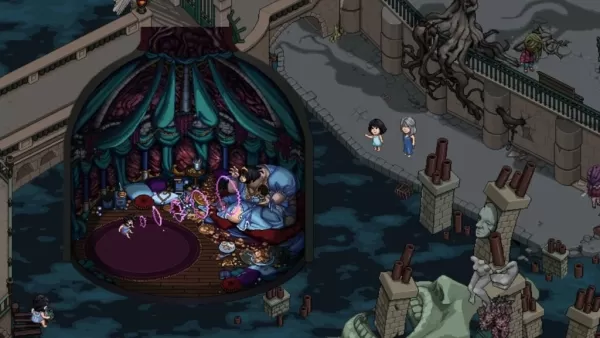
East2West Games запустила новую игру под названием Decarnation для Android и iOS. Действие происходит в Париже 1990-х годов и представляет собой психологический хоррор-пазл с пиксельной графикой и поэтичным, атмосферным стилем. В отличие от большинства игр, этот проект делает акцент на внутреннем созерцании, а не на действиях.
О чём история в Decarnation?
Игра следует за Глорией — танцовщицей в кабаре, чья жизнь рухнула во всех отношениях. Её карьера застопорилась, отношения растерялись, и она потеряла связь с тем, кто она на самом деле.
Затем, без предупреждения, таинственный покровитель предлагает ей шанс вновь заняться искусством — и она принимает предложение. Но то, что начинается как спасительная нить, вскоре превращается в спуск в глубинные пещеры её сознания, где реальность и иллюзия перестают различаться.
Каждый элемент игры — это искажённое отражение внутреннего мира Глории. В один миг вы бродите по жутко живому театру, в следующий — оказываетесь запертыми в раздробленных реальностях, наполненных меняющимися символами и полузабытыми страхами.
Визуально пиксельная графика поражает своей тревожной атмосферой. Она передаёт хрупкую красоту сцены, которая распадается — яркие цвета, резкие контрасты, мрачная грация. Тон и структура игры — дань уважения грандам психологических триллеров, таким как Сатоси Кон, автор «Perfect Blue», и Дэвид Линч, создатель «Mulholland Drive». Посмотрите трейлер Decarnation ниже.
Это мир, личный, тревожный и насыщенный символикой
----------------------------------------------------------------
Монстры в Decarnation — не случайные враги. Они являются физическим воплощением стыда, отрицания, одиночества и сомнений в себе. Каждое столкновение превращает внутренний хаос в осязаемое, превращая каждый успех в тихий шаг к исцелению.
Разработчики описывают Decarnation как исследование столкновения с собой, когда больше некуда бежать. Это борьба, с которой сталкивается каждый из нас — борьба со скрытыми частями себя, на которые мы потратили годы.
Команда черпала вдохновение в темах травмы, идентичности и внутреннего конфликта — и надеется, что игроки найдут глубокую эмоциональную правду в распадающемся пути Глории.
Получите игру в Google Play Store за 3,99 доллара.
Также прочитайте наше сообщение о гибридном фэнтези-приключенческом RPG Duet Night Abyss для Android.
Ограниченное по времени специальное событие призыва уже началось Новые боссы ждут вашего вызова Свежий сезонный сюжет для исследования Netmarble выпустила крупное обновление для игры The Seven Deadly Sins: Grand Cross, включающее множество огранич
Puella Magi Madoka Magica Magia Exedra запускает летнюю кампанию с оригинальным сезонным сюжетом и особыми вариантами персонажей. Не пропустите миссии кампании, которые предлагают премиальные награды.Хотя летний сезон постепенно подходит к концу с пр
Версия 2.5 игры Wuthering Waves, «Неувядающая мелодия жизни», уже доступна. Погрузитесь в новую глубинную фабрику и присоедините новейшего резонатора — Фролову. Начните новые сюжетные квесты и овладейте новой силой Оркестровки. С наступлением выхо
Погрузитесь в мир аркадных игр с нашей тщательно подобранной коллекцией классических и новых хитов! Испытайте острые ощущения от ретро-геймплея с такими играми, как Clone Cars и Brick Breaker - Balls vs Block, или откройте для себя новые инновационные возможности с Fancade, Polysphere и Riot Squid. Являетесь ли вы поклонником головоломок (Screw Pin Puzzle 3D), захватывающих приключений (Rope-Man Run, Sword Slash) или соревновательных многопользовательских игр (пинг-понг для 1-2-3-4 игроков), в этой коллекции найдется что-то для себя. каждый. Откройте для себя лучшее из аркадных игр с Тольфом и многими другими захватывающими приложениями. Загрузите Clone Cars, Fancade, пинг-понг для 1-2-3-4 игроков, Brick Breaker - Balls vs Block, Polysphere, Riot Squid, Tolf, Rope-Man Run, SwordSlash и Screw Pin Puzzle 3D уже сегодня!
 Дом
Дом  Навигация


 Последние статьи






 Последние игры